

 Something else? Ask Aunt Vadge – bottom left of your screen!
Atrophic vaginitis is a dry, sore, easily-torn vagina caused by falling oestrogen, most often from natural or medical menopause, or any loss of ovarian function. It’s now understood as part of a wider cluster of changes called the genitourinary syndrome of menopause (GSM), which covers the vulva, vagina and lower urinary tract together.1–2
The good part is that it’s very treatable, and there’s far more to the toolkit than oestrogen alone. This guide runs through the full range, from moisturisers and evidence-backed botanicals to pelvic floor work, hormonal options and whole-body support.
Being treated for an oestrogen-dependent breast cancer changes which options are suitable, so if that’s you, start with our companion guide on atrophic vaginitis for breast cancer survivors.
Why it happens: oestrogen, the ovaries and the adrenals
Oestrogen keeps the vaginal and vulvar tissues plump, elastic and well supplied with blood. When the ovaries wind down and oestrogen falls, the tissues lose elasticity, thin out, and become red, sore and easily damaged, sometimes just from wiping, washing or wearing underwear. For some women it makes sex, movement and even going to the toilet painful, and that’s distressing.
Here’s a piece that often gets missed. After menopause the ovaries stop, but the adrenal glands keep producing a hormone precursor called DHEA, which the body’s tissues convert locally into oestrogen and testosterone right where they’re needed.3 This process, known as intracrinology, is why vaginal DHEA works as a treatment (more below), and it’s part of why overall adrenal and metabolic health matter for how well the tissues cope after menopause.
What changes in the vagina
When oestrogen is plentiful, plump superficial cells dominate the vaginal lining. As it falls, thinner parabasal cells take over, with far fewer intermediate and superficial cells. (Read about vaginal epithelial cell types.) The Vaginal Maturation Index measures this shift to gauge how much atrophy is present.
Gland activity in the vagina and cervix drops, which is what causes the characteristic dryness. Blood flow falls, elasticity is lost, the rugae (the ripples in the vaginal walls) flatten, and all the tissues thin. The vagina can shorten and narrow.
The pH also rises (becomes less acidic), because there’s less glycogen to feed the lactic-acid-producing protective bacteria that normally keep the vagina acidic.4 That leaves the vagina more prone to irritation and infection, so looking after the vaginal microbiome is part of the picture too.
Symptoms and diagnosis
- Vaginal dryness
- Painful sex (dyspareunia)
- Vulvar and vaginal irritation, itching, burning or soreness
- Discharge
- Easy tearing
Diagnosis is based on your symptoms and a gynaecological examination, sometimes with testing to rule out other causes. A physical exam is a doctor or gynaecologist’s job; at My Vagina we work alongside that with the topical, functional and lifestyle side.
The functional and non-hormonal toolkit
Lifestyle and non-hormonal measures won’t replace the oestrogen your tissues have lost, but a well-chosen combination restores real comfort for a lot of women, and it’s usually where major guidelines suggest starting. These options can also be layered with hormonal treatment.
Vaginal moisturisers
Used regularly (not just for sex), vaginal moisturisers work on the tissue itself, unlike lube. Polycarbophil-based moisturisers have been shown to improve moisture, fluid volume, pH and elasticity about as well as vaginal oestrogen cream, though the pH effect is not long-lasting.5–6 Hyaluronic-acid moisturisers are another well-regarded non-hormonal option. They work by binding water to the vaginal lining, and there are some excellent natural products, so it’s worth shopping around for one that suits you.
Fennel and sea buckthorn
Some plant compounds have real evidence behind them for atrophy. A fennel (Foeniculum vulgare) 5% vaginal cream improved vaginal maturation and symptoms in a double-blind randomised trial, with no side effects.7 Taken by mouth, sea buckthorn oil improved the integrity of the vaginal lining in a randomised, placebo-controlled study, making it a useful option for women who can’t or don’t want to use oestrogen.8
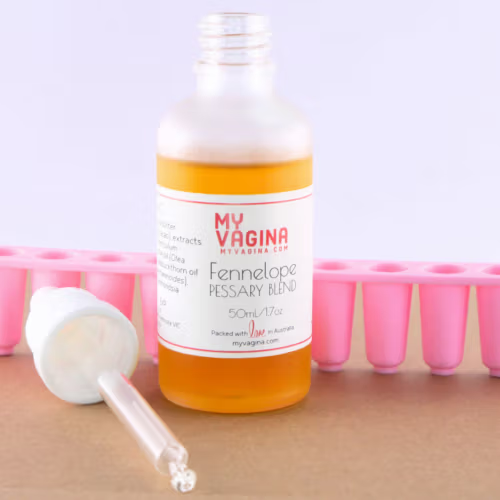
You can make your own preparations at home, or use the premade version. Our Fennelope pessary combines both in vagina-safe, all-natural plant oils.9
Vitamin E and vitamin D
Vaginal vitamin E suppositories improved vaginal atrophy in postmenopausal women in a randomised trial (though not quite as strongly as oestrogen cream), and are a gentle non-hormonal option.10 Vitamin D also supports the vaginal lining: it helps the epithelial cells proliferate and strengthens the tissue barrier, and vaginal vitamin D is being studied for atrophy.9
Phyto-oestrogens and food
Food is a safe, sustainable way to nudge your oestrogen activity along. Phyto-oestrogens are plant compounds with a mild oestrogen-like effect, found mainly in soy foods like tofu and tempeh, and in flaxseed.11–12 They’re not a stand-alone fix for established atrophy, but they’re a sensible part of the wider picture, and they help with other menopausal symptoms too.
Pelvic floor physiotherapy
This is an underused one. Working with a pelvic floor physiotherapist improves blood flow to the area, keeps the tissues supple and the vaginal opening flexible, and eases painful sex. In a study of pelvic floor muscle training for GSM, women had less dryness and dyspareunia and a better quality of sexual life.13 A physio can also guide the safe use of well-lubricated dilators to gently stretch tight or narrowed tissue, and help you work through the anxiety that pain around penetration understandably creates.
Regular sexual activity
Regular sex and masturbation, alone or with a partner, increase vaginal blood flow and help maintain tissue and pH. ‘Use it or lose it’ is imperfect but has a grain of truth here: keeping the tissues active and well-lubricated helps.
Lifestyle, adrenal and whole-body support
Because postmenopausal hormones increasingly come from adrenal DHEA converted in the tissues, overall health does real work here.3 Quitting smoking matters a lot, since good blood flow is directly tied to vaginal moisture and smoking narrows the blood vessels. Regular exercise, decent sleep, managing chronic stress (which taxes the adrenals) and eating well all support the tissues and your hormones more broadly.
Lubricants
Lube is short-acting and reduces friction during sex, and can ease irritation from clothing, but it doesn’t restore the tissue the way a moisturiser does. For dry, sensitive or atrophic tissue, choose a lubricant that’s pH-balanced and iso-osmolar, and ideally glycerin-free, since glycerin can irritate delicate tissue and feed yeast. Silicone-based lubes last longer than water-based ones and are a good option for very dry tissue. A combination that works well for many women is a bioadhesive moisturiser several days a week, plus a good lube before and during sex.
Hormonal and medical options
Vaginal oestrogen
Low-dose vaginal oestrogen, in creams, gels, rings, pessaries or tablets, still gives the best results of any single treatment, and it acts locally with little absorbed into the bloodstream.5,14 It’s prescription-only, so talk to your doctor about what’s available where you live. Oestriol (E3) is a milder oestrogen that gives local benefit and is often preferred for its safety profile.14
Vaginal DHEA (prasterone)
Vaginal DHEA is the clever one that fits the adrenal story above. Inserted vaginally, DHEA is converted inside the vaginal cells into the oestrogen and testosterone the tissue needs, while blood hormone levels stay in the normal postmenopausal range. In randomised trials it significantly improved dyspareunia, dryness and the other signs of atrophy, and it’s approved specifically for painful sex due to GSM.3
Systemic HRT and testosterone
Whole-body hormone replacement therapy (HRT), set up by your doctor, treats atrophy alongside other menopausal symptoms.4–5 Testosterone can help too, since the vagina has androgen receptors and testosterone also converts into oestrogen locally; vaginal testosterone improved atrophy in trials, and is sometimes compounded together with oestrogen (oestrogen works on the surface layers, testosterone on the deeper ones).6 These are doctor-led decisions.
Vaginal laser and radiofrequency
Laser and radiofrequency devices (Juliet, ThermiVa, MonaLisa Touch and others) aim to stimulate the vaginal tissue to renew itself, and some studies report improvements in dryness, irritation and laxity.15 Be aware, though, that regulators including the US FDA have cautioned that the safety and effectiveness of these devices for vaginal ‘rejuvenation’ and GSM are not established, with reports of burns, scarring and lasting pain. They’re costly, results fade so treatments need repeating, and they’re best approached with realistic expectations and a careful practitioner rather than as a guaranteed, risk-free fix.
If you’ve had an oestrogen-dependent cancer
This group has a harder time, because most oestrogen-dependent breast cancers are treated by lowering oestrogen, so adding it back is understandably a concern, and older studies raised the possibility of higher recurrence.16 Encouragingly, the non-hormonal toolkit above (moisturisers, fennel and sea buckthorn, vitamin E, pelvic floor work, lubricants) is well suited here, and low-dose local oestriol or vaginal DHEA may be options with your oncologist’s input.14 The OVERcome study (olive oil, vaginal exercise and moisturiser) showed meaningful improvements in dyspareunia and quality of life in breast cancer survivors.17 See our dedicated guide on atrophic vaginitis for breast cancer survivors.
What to avoid
- Never douche, and skip harsh, perfumed or ‘deodorising’ soaps and washes.
- Anything coloured, flavoured, or full of chemicals and preservatives near the vulva or vagina.
- Synthetic underwear and clothing, and harsh laundry detergents or fabric softeners.
- Rough handling. Your more delicate tissue can’t take what it used to, so be gentle, because tears heal slowly.
In our clinic, GSM and vaginal dryness respond well to a layered approach: daily moisturisers, phyto-oestrogen support like fennel and sea buckthorn, pelvic floor work and whole-body care, alongside hormonal options where they suit. What works is individual, so it’s worth trying a few things to find your combination, and you can book an appointment if you’d like help putting a plan together.
This is general information, not a substitute for personalised medical advice.
- Castelo-Branco C, Cancelo MJ, Villero J, Nohales F, Juliá MD. Management of post-menopausal vaginal atrophy and atrophic vaginitis. Maturitas. 2005;52(Suppl 1):S46–S52.
- Nappi RE, Martini E, Cucinella L, et al. Addressing vulvovaginal atrophy (VVA)/genitourinary syndrome of menopause (GSM) for healthy aging in women. Front Endocrinol. 2019;10:561.
- Labrie F, Archer DF, Koltun W, et al. Efficacy of intravaginal dehydroepiandrosterone (DHEA) on moderate to severe dyspareunia and vaginal dryness, symptoms of vulvovaginal atrophy, and of the genitourinary syndrome of menopause. Menopause. 2016;23(3):243–256.
- Shen J, Song N, Williams CJ, et al. Effects of low dose estrogen therapy on the vaginal microbiomes of women with atrophic vaginitis. Sci Rep. 2016;6:24380.
- Lynch C. Vaginal estrogen therapy for the treatment of atrophic vaginitis. J Womens Health. 2009;18(10):1595–1606.
- Fernandes T, Costa-Paiva LH, Pedro AO, Baccaro LFC, Pinto-Neto AM. Efficacy of vaginally applied estrogen, testosterone, or polyacrylic acid on vaginal atrophy: a randomized controlled trial. Menopause. 2016;23(7):792–798.
- Yaralizadeh M, Abedi P, Najar S, Namjoyan F, Saki A. Effect of Foeniculum vulgare (fennel) vaginal cream on vaginal atrophy in postmenopausal women: a double-blind randomized placebo-controlled trial. Maturitas. 2016;84:75–80.
- Larmo PS, Yang B, Hyssälä J, Kallio HP, Erkkola R. Effects of sea buckthorn oil intake on vaginal atrophy in postmenopausal women: a randomized, double-blind, placebo-controlled study. Maturitas. 2014;79(3):316–321.
- Li D, Zhang T, Yang H, Yang W, Zhang C, Gao G. Effect of vitamin D on the proliferation and barrier of atrophic vaginal epithelial cells. Molecules. 2023;28(18):6605.
- Parnan Emamverdikhan A, Golmakani N, Tabassi SAS, Hassanzadeh M, Sharifi N, Shakeri MT. A survey of the therapeutic effects of vitamin E suppositories on vaginal atrophy in postmenopausal women. Iran J Nurs Midwifery Res. 2016;21(5):475–481.
- Domínguez-López I, Yago-Aragón M, Salas-Huetos A, Tresserra-Rimbau A, Hurtado-Barroso S. Effects of dietary phytoestrogens on hormones throughout a human lifespan: a review. Nutrients. 2020;12(8):2456.
- Sowers MR, Crawford S, McConnell DS, et al. Selected diet and lifestyle factors are associated with estrogen metabolites in a multiracial/ethnic population of women. J Nutr. 2006;136(6):1588–1595.
- Mercier J, Morin M, Zaki D, et al. Pelvic floor muscle training as a treatment for genitourinary syndrome of menopause: a single-arm feasibility study. Maturitas. 2019;125:57–62.
- Archer DF, Kimble TD, Lin FDY, Battucci S, Sniukiene V, Liu JH. A randomized, multicenter, double-blind study to evaluate the safety and efficacy of estradiol vaginal cream 0.003% in postmenopausal women with vaginal dryness as the most bothersome symptom. J Womens Health. 2018;27(3):231–237.
- Wańczyk-Baszak J, Woźniak S, Milejski B, Paszkowski T. Genitourinary syndrome of menopause treatment using lasers and temperature-controlled radiofrequency. Prz Menopauzalny. 2018;17(4):185–189.
- Lester J, Pahouja G, Andersen B, Lustberg M. Atrophic vaginitis in breast cancer survivors: a difficult survivorship issue. J Pers Med. 2015;5(2):50–66.
- Juraskova I, Jarvis S, Mok K, et al. The acceptability, feasibility, and efficacy (phase I/II study) of the OVERcome (olive oil, vaginal exercise, and moisturizer) intervention to improve dyspareunia and alleviate sexual problems in women with breast cancer. J Sex Med. 2013;10(10):2549–2558.