

 Something else? Ask Aunt Vadge – bottom left of your screen!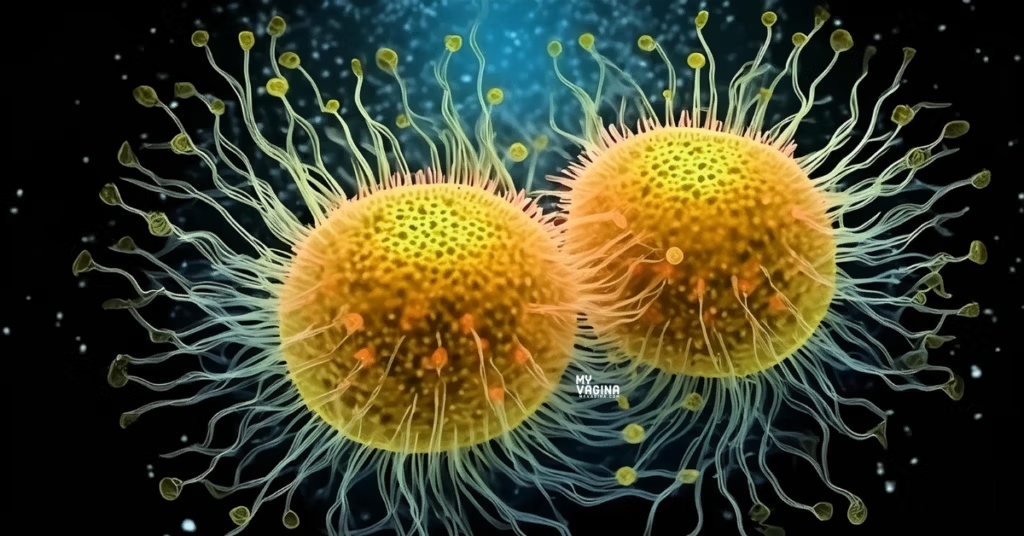

Gonorrhoea is a common sexually transmitted infection (STI) caused by the bacteria Neisseria gonorrhoeae. It can infect the genitals, throat, rectum or eyes, and is passed on through vaginal, oral or anal sex.1
Like chlamydia, gonorrhoea often causes no symptoms, especially in women and in throat and rectal infections, so it spreads unnoticed and testing is the only reliable way to know. It’s curable with antibiotics, but antibiotic resistance is a serious and growing problem, which makes prompt, proper treatment and a follow-up check all the more important.2–3
Symptoms of gonorrhoea
When symptoms do appear, they vary by where the infection is. Around a third to a half of women have no genital symptoms at all, which is why gonorrhoea is so easily missed.1
Symptoms in women
- Burning or pain when weeing, which can feel like a urinary tract infection (UTI)
- Increased or unusual vaginal discharge, sometimes foul-smelling
- Bleeding between periods or after sex (unusual bleeding)
- Pelvic or lower abdominal pain
- Often no symptoms at all: around a third to a half of women notice nothing
Symptoms in men
- Burning when weeing
- Yellow or white discharge from the penis
- Sore or swollen testicles (less common)
Anal symptoms (anyone)
- Discharge from the anus
- Itching, soreness or bleeding
- Pain when passing a bowel motion
- Often no symptoms at all
Throat symptoms (anyone)
- Usually no symptoms
- Sometimes a sore throat or discomfort swallowing, which can look like strep throat, with redness or white spots
- Signs can appear 7 to 21 days after oral or anal contact
Gonorrhoea can also infect the eyes, causing a serious form of conjunctivitis, so it’s worth taking eye symptoms seriously if there’s any chance of exposure.4 You can read more about the link between STIs and eye health.
Testing for gonorrhoea
The best first stop is a sexual-health clinic or your doctor, because they can both test you and treat you on the spot. Testing is usually a swab or urine sample, and swabs can be taken from the throat or rectum too if those sites may have been exposed. A comprehensive PCR or NGS test can also pick up gonorrhoea alongside other infections. You don’t need symptoms to get tested, and gonorrhoea is one of several sexually transmitted infections worth screening for if you’re sexually active.
Treatment for gonorrhoea
Gonorrhoea needs antibiotics, and it needs them promptly. Current guidelines treat uncomplicated gonorrhoea with a single injection of the antibiotic ceftriaxone, given by a clinician.5 If chlamydia hasn’t been ruled out, a course of doxycycline is usually added.
The reason this matters so much is antibiotic resistance. Neisseria gonorrhoeae has steadily outrun one antibiotic after another, and strains resistant to nearly everything we have are now emerging, which is exactly why gonorrhoea is treated with a carefully chosen injection rather than leftover tablets, and never with a home remedy.6–8
A few things make treatment stick. Avoid sex for seven days after treatment, and until any partners have been treated too. Recent sexual partners need testing and treatment, or the infection just bounces back. A repeat test around three months later picks up reinfection, and a test of cure is specifically recommended for throat infections, or if symptoms don’t settle.5
Could plant medicine help?
Because resistance is closing in, researchers are actively hunting for new options, and that includes plant compounds. Traditional medicines such as Cryptolepis sanguinolenta have shown antibacterial activity against Neisseria gonorrhoeae in laboratory and traditional-use studies.9–12
This is promising for the future, and worth watching given how few antibiotics still work. It is not a current treatment, though: the evidence so far is early, laboratory-stage work, and gonorrhoea today must be cleared with antibiotics. Delaying proper treatment to try a botanical risks the infection spreading and doing lasting harm.
Where botanicals and the microbiome do have a clear role is afterwards. In our clinic, once the antibiotics have done their job, we help women rebuild the vaginal microbiome that a course of antibiotics inevitably knocks back, with probiotics and plenty of fermented foods. If you’d like a hand with that, you can book an appointment.
What untreated gonorrhoea can do
Treated promptly, gonorrhoea usually clears without lasting damage. Left untreated, it can cause real harm, which is the whole reason testing and quick treatment matter.13–14
In women, it can spread upward and cause pelvic inflammatory disease, scarring the fallopian tubes. That scarring can lead to long-term pelvic pain and tubal infertility, and it raises the risk of an ectopic pregnancy, where a pregnancy implants in the narrow fallopian tube instead of the uterus. An ectopic pregnancy can’t continue safely and is a medical emergency, because the tube can rupture.15–16
In men, gonorrhoea can inflame the tubes behind the testicles and occasionally affect fertility. In anyone, it can more rarely spread into the blood and joints, which is serious and needs urgent care. In pregnancy, it can be passed to the baby during birth, causing a serious eye infection, which is why it’s screened for and treated in pregnancy.3
This is general information, not a substitute for personalised medical advice.
- Sweet RL, Walker CK. Gonorrhea infection in women: prevalence, effects, screening, and management. Int J Womens Health. 2011;3:197–206.
- Unemo M, Seifert HS, Hook EW III, et al. Gonorrhoea. Nat Rev Dis Primers. 2019;5(1):79.
- Chidiac O, AlMukdad S, Harfouche M, et al. Epidemiology of gonorrhoea: systematic review, meta-analyses, and meta-regressions, World Health Organization European Region, 1949 to 2021. Euro Surveill. 2024;29(9):2300226.
- Dolange V, Churchward CP, Christodoulides M, Snyder LAS. The growing threat of gonococcal blindness. Antibiotics. 2018;7(3):59.
- St Cyr S, Barbee L, Workowski KA, et al. Update to CDC’s treatment guidelines for gonococcal infection, 2020. MMWR Morb Mortal Wkly Rep. 2020;69(50):1911–1916.
- Suay-García B, Pérez-Gracia MT. Future prospects for Neisseria gonorrhoeae treatment. Antibiotics. 2018;7(2):49.
- Ison CA, Deal C, Unemo M. Current and future treatment options for gonorrhoea. Sex Transm Infect. 2013;89(Suppl 4):iv52–iv56.
- Skerlev M, Čulav-Košćak I. Gonorrhea: new challenges. Clin Dermatol. 2014;32(2):275–281.
- Nazer M, Abbaszadeh S, Darvishi M, et al. The most important herbs used in the treatment of sexually transmitted infections in traditional medicine. Sudan J Med Sci. 2019;14(2):41–64.
- Silva O, Caldeira G, Serrano R. A review of the role of medicinal plants on Neisseria gonorrhoeae infection. Eur J Integr Med. 2020;39:101211.
- Boakye-Yiadom K. Antimicrobial properties of some West African medicinal plants II: antimicrobial activity of aqueous extracts of Cryptolepis sanguinolenta (Lindl.) Schlechter. Q J Crude Drug Res. 1979;17(2):78–80.
- Osafo N, Mensah KB, Yeboah OK. Phytochemical and pharmacological review of Cryptolepis sanguinolenta (Lindl.) Schlechter. Adv Pharmacol Sci. 2017;2017:3026370.
- Piszczek J, St Jean R, Khaliq Y. Gonorrhea. Can Pharm J (Ott). 2015;148(2):82–89.
- Sherrard J. Gonorrhoea. Medicine. 2014;42(6):323–326.
- Reekie J, Donovan B, Guy R, et al. Risk of ectopic pregnancy and tubal infertility following gonorrhea and chlamydia infections. Clin Infect Dis. 2019;69(9):1621–1623.
- Barlow D, Phillips I. Gonorrhoea in women: diagnostic, clinical, and laboratory aspects. Lancet. 1978;311(8067):761–764.