

 Something else? Ask Aunt Vadge – bottom left of your screen!
Immunotherapy restored fertility in some women with autoimmune early menopause
A Swedish pilot used the immunotherapy rituximab to temporarily reactivate the ovaries in autoimmune premature ovarian insufficiency, and three women had healthy babies.
Ovarian hyperthecosis – the ‘bad kind’ of postmenopausal PCOS (PMOS)
The most common cause of high androgens after menopause, ovarian hyperthecosis causes unwanted hair, virilisation and hidden metabolic and uterine risks.
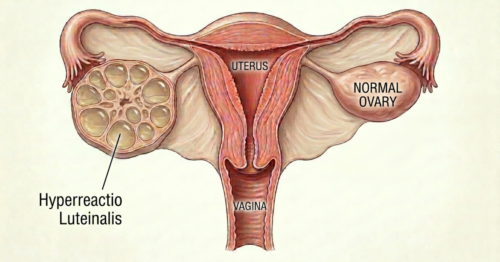
Hyperreactio luteinalis: swollen ovaries during pregnancy
Hyperreactio luteinalis is a benign, hCG-driven swelling of the ovaries in pregnancy that looks alarming but almost always settles after birth.
Premature ovarian failure (or insufficiency)
Premature ovarian failure is the loss of ovarian function, which can occur for a few different reasons, but ultimately results in a (possibly temporary) loss of fertility.
Follicular ovarian cysts
Follicular cysts develop from a follicle during ovulation, in one or both ovaries. Follicular cysts are the most common type of ovarian cyst and are considered to be a normal part of the ovary going about its business.
Endometrioma (chocolate) cysts
An ovarian endometrioma is where menstrual blood and endometrial cells find their way into the ovary, developing a problematic cyst over time. They are called 'chocolate' cysts because of their chocolate-like appearance.
Cystic teratomas and dermoid cysts – ovarian
A dermoid cyst is a growth in the ovary that contains hair, teeth, bone, and other tissue. A dermoid cyst is not a pregnancy, but a tumour.
Benign ovarian masses
Benign ovarian masses can include non-cancerous tumours or cysts, with most coming and going without symptoms. A benign mass could mean a cyst that develops during or after ovulation, or a tumour that appears out of embryonic tissue.
Ovarian cystadenomas (a cystic ovarian tumour)
A cystadenoma is a (generally) benign tumour on one or both ovaries.
Corpus luteum cyst (a functional ovarian cyst)
A corpus luteum cyst is most often a benign ovarian cyst caused by the process of ovulation that will resolve itself over a period of weeks. These ovarian cysts are benign, which means they are not dangerous.
What are polycystic ovaries?
Polycystic ovaries are ovaries with many cyst-like structures on them, though whether they are true cysts or not will depend on investigations.
Hyperreactio luteinalis – rare case of enlarged, polycystic ovaries during pregnancy
Hyperreactio luteinalis is a rare, benign ovarian condition often mistaken for ovarian cancer.
Ovarian cysts
We go over all the types of ovarian cysts that a woman could develop, and explain why they develop. We also discuss the typical treatment options that you will be offered, and what they involve.
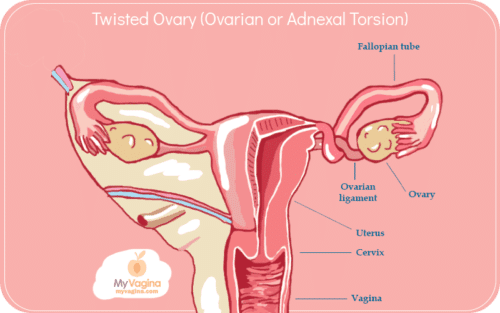
Adnexal or ovarian torsion
A twisted ovary is a very painful medical emergency, where the blood supply to the ovary and/or fallopian tube is cut off, causing death of ovarian tissue.