

 Something else? Ask Aunt Vadge – bottom left of your screen!

Here we take you through the impact of the various birth control methods and pregnancy on vaginal pH and the risk of vaginal microflora imbalances like bacterial vaginosis (BV), aerobic vaginitis (AV) and maintenance of a healthy vaginal microbiome.
The combined oral contraceptive pill and vaginal pH
The combined oral contraceptive birth control pill regulates hormone levels with synthetic oestrogen and progesterone.
Those on oestrogen-containing birth control pills tend to experience less vaginal microflora imbalances due to the stabilisation of oestrogen levels and the resultant glycogen (lactobacilli food).1,2
However, low-oestrogen birth control pills can actually reduce overall oestrogen levels, which can prove problematic for sustaining a healthy vaginal bacterial colony.
If you are on oestrogen-containing hormonal birth control, your pH will likely stay the same between periods since oestrogen levels – thus glycogen levels and lactobacilli populations – stay stable.
Depo Provera injection and the vaginal microbiome
Those on the Depo Provera contraceptive injection also see slightly lower levels of BV despite the injection blocking oestrogen.1
It must be stressed that this slight protective effect of some forms of hormonal birth control is not a good reason to use it. It won’t help you. Those on hormonal birth control still get BV, and it can be just as hard to get rid of.
Intra-uterine devices (IUDs) and the vagina
Both hormonal and non-hormonal copper IUDs may be problematic for the vaginal microflora in their own ways. Still, the copper IUD is hands down the most problematic for some people.
The plastic and strings of all IUDs are a solid surface for biofilms to develop, which can keep vaginal dysbiosis hanging around despite good treatments.
Copper IUDs
Copper IUDs (such as the Paragard) are known to change the vaginal flora negatively by specifically inhibiting L. crispatus growth.3
The copper ions also increase oestrogen locally in the uterus, causing that first year of often problematically heavy, long periods. This may contribute to the observation of higher rates of BV in those using this form of contraception.
Hormonal IUDs
The hormonal IUD (such as the Mirena) may contribute to yeast infections and a small increase in the risk of BV soon after insertion. But that appears to settle, and the vaginal microbiome appears largely unaffected.4
Spermicides – very bad for the vaginal microbiome
Spermicides are known to alter the vaginal microbiome negatively, with any product containing Nonoxynol-9 being the worst, effectively acting like a ‘detergent’ in the vagina, causing irritation and a loss of protective flora.5
Latex condoms and the vaginal microbiome
Condoms are often used most safely with lubricants and sometimes spermicides. Condoms may increase the risk of inflammation of the vagina due to friction and other irritations but are not otherwise usually associated with a change in vaginal microflora.2

Diaphragms and cervical caps – negative impact on flora
Diaphragms and caps are both used with spermicide, which we know alters the vaginal microbiome negatively.
AV-related bacteria have been shown to significantly increase a week after commencing use of cervical caps or diaphragms, causing mechanical and chemical disturbances to the vaginal microbiome.6,7
Contraceptive sponge impact on flora
Contraceptive sponges may contain Nonoxynol-9 spermicide, but natural sea sponges without spermicide are likely not a contributing factor to vaginal dysbiosis.5
Take care to remove sponges at the correct intervals, avoiding prolonged insertion with blood sitting on the sponge inside the vagina.
Pregnancy vaginal microbiome
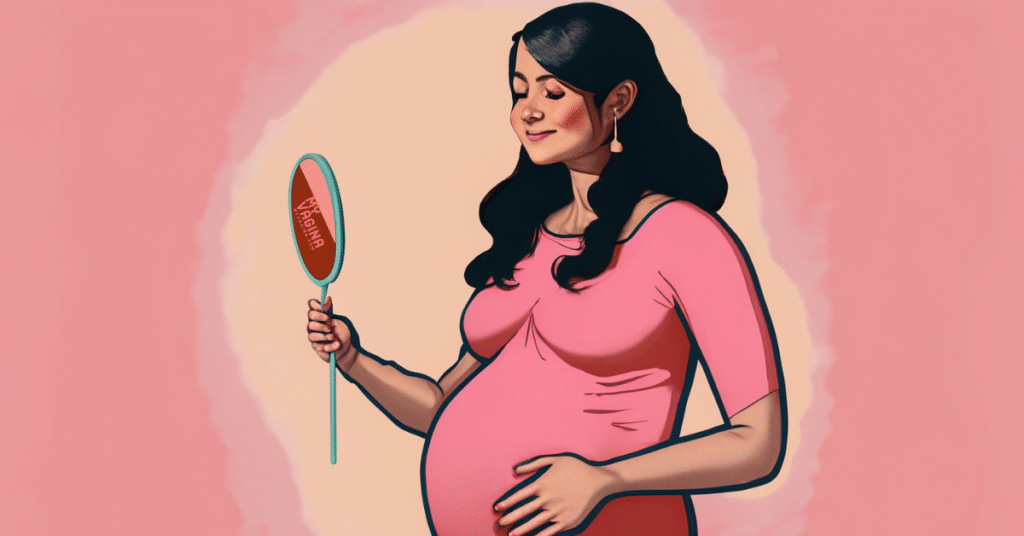
During pregnancy, we see higher progesterone and oestrogen. Pregnancy comes with its own vaginal microbiome ‘signature’ of dominance of lactobacilli species – L. crispatus, L. jensenii, L. johnsonii and L. iners.8 Richness and diversity decrease during pregnancy.9
Frequently asked questions
Which birth control is worst for the vaginal microbiome?
Anything with a spermicide (especially Nonoxynol-9) and the copper IUD tend to give the vaginal flora the hardest time. Diaphragms and caps are used with spermicide, so they land in the same basket. It is worth saying that the right contraception for you is a personal decision with a lot of moving parts, and microbiome effects are only one of them.
Does the pill cause or prevent BV?
Oestrogen-containing combined pills are linked with slightly less BV on average, because steady oestrogen keeps glycogen and lactobacilli topped up. That is not a reason to take the pill for your vagina, and it is not a treatment. Plenty of people on the pill still get BV, and low-oestrogen pills can actually work against you.
Can an IUD cause recurrent BV?
It can play a part. The plastic and the strings give biofilms a solid surface to cling to, which can keep dysbiosis hanging around even when your treatment is otherwise good. The copper IUD is the bigger troublemaker of the two; the hormonal IUD usually settles after the first few months.
Does pregnancy change vaginal pH?
Yes. Higher oestrogen and progesterone push the microbiome towards a lactobacilli-dominant, lower-diversity state, which usually keeps pH nicely acidic. That is protective, but it does not make you immune to BV or yeast in pregnancy, so any new symptoms are still worth checking.
This article is general information and not a substitute for personalised medical advice. If you have ongoing vaginal symptoms, unusual discharge or bleeding, or you are weighing up contraceptive options, please talk it through with an experienced practitioner.
- Vodstrcil LA, Hocking JS, Law M, et al. Hormonal contraception is associated with a reduced risk of bacterial vaginosis: a systematic review and meta-analysis. PLoS One. 2013;8(9):e73055.
- Bakus C, Budge KL, Feigenblum N, Figueroa M, Francis AP. The impact of contraceptives on the vaginal microbiome in the non-pregnant state. Frontiers in Microbiomes. 2023;2:1055472.
- Brown BP, Feng C, Tanko RF, et al. Copper intrauterine device increases vaginal concentrations of inflammatory anaerobes and depletes lactobacilli compared to hormonal options in a randomized trial. Nature Communications. 2023;14(1):499.
- Donders GGG, Bellen G, Ruban K, Van Bulck B. Short- and long-term influence of the levonorgestrel-releasing intrauterine system (Mirena) on vaginal microbiota and Candida. Journal of Medical Microbiology. 2018;67(3):308–313.
- Schreiber CA, Meyn LA, Creinin MD, Barnhart KT, Hillier SL. Effects of long-term use of nonoxynol-9 on vaginal flora. Obstetrics & Gynecology. 2006;107(1):136–143.
- Gupta K, Hillier SL, Hooton TM, Roberts PL, Stamm WE. Effects of contraceptive method on the vaginal microbial flora: a prospective evaluation. The Journal of Infectious Diseases. 2000;181(2):595–601.
- Hooton TM, Roberts PL, Stamm WE. Effects of recent sexual activity and use of a diaphragm on the vaginal microflora. Clinical Infectious Diseases. 1994;19(2):274–278.
- Aagaard K, Riehle K, Ma J, et al. A metagenomic approach to characterization of the vaginal microbiome signature in pregnancy. PLoS One. 2012;7(6):e36466.
- Romero R, Hassan SS, Gajer P, et al. The composition and stability of the vaginal microbiota of normal pregnant women is different from that of non-pregnant women. Microbiome. 2014;2:4.