

 Something else? Ask Aunt Vadge – bottom left of your screen!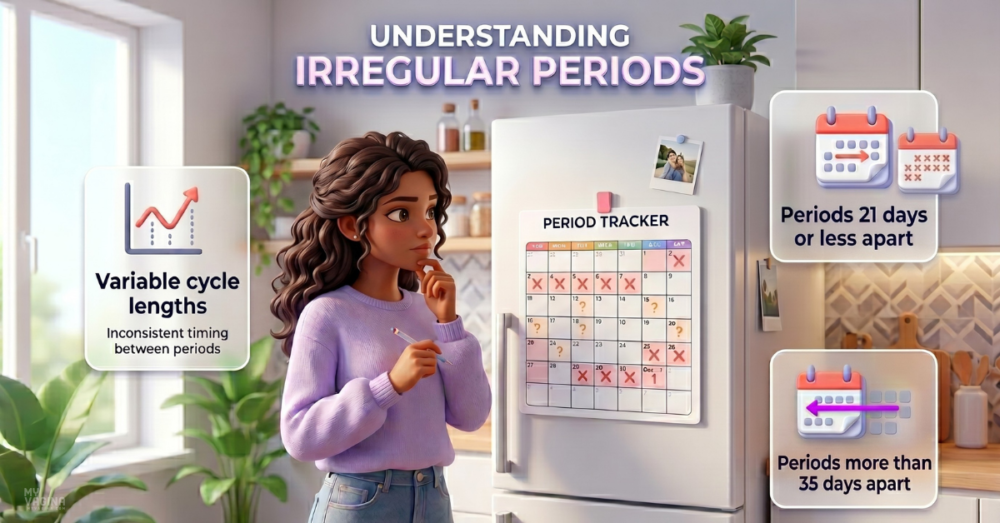

Polymenorrhea means getting your period too often – more than one bleed within a 21-day window, or cycles that keep coming closer together than they should. In modern medical language it sits under ‘frequent menstrual bleeding’. The International Federation of Gynecology and Obstetrics (FIGO) defines this as a cycle shorter than 24 days in people aged roughly 18 to 45.1
Most of the time, frequent periods are not a disease in themselves. They are a signal that something upstream – your ovulation timing, your hormones, your thyroid, or the structure of your uterus – has shifted.1
The good news is that the cause is usually findable and, in most cases, treatable. The main thing we want to head off is the slow blood loss that comes with bleeding too often, because that quietly drains your iron.
This guide walks through what counts as ‘too frequent’, the full list of things that can drive it, how it is investigated, and when it is worth getting checked.
What is polymenorrhea?
A typical menstrual cycle is counted from the first day of one period to the first day of the next. FIGO considers a normal cycle length to be 24 to 38 days, with the bleed lasting up to about eight days.1
Polymenorrhea is the older clinical word for cycles that are too short – traditionally under 21 days, meaning periods that arrive more than once in three weeks. The newer, preferred term is ‘frequent menstrual bleeding’, set at a cycle under 24 days.1
Both describe the same experience: bleeding that turns up sooner than expected, sometimes feeling like you have barely finished one period before the next begins.
It is the mirror image of infrequent or light periods (oligomenorrhoea), where cycles stretch out too far apart. Both are types of abnormal uterine bleeding, and both are worth understanding rather than ignoring.
Is it normal to get your period this often?
There are two life stages where shorter cycles are common and usually nothing to worry about.
The first is the few years after your first period, when the hormonal feedback loop between brain and ovaries is still settling and ovulation is not yet regular.2
The second is perimenopause. As the ovary’s pool of eggs declines, the first half of the cycle – the follicular phase – tends to shorten. So cycles can pull in by three to seven days before they eventually lengthen and space out.3 Many people in their forties notice their periods arriving every two to three weeks for a while.
Outside those windows, regularly bleeding more often than every 24 days is worth a conversation with a clinician. Not because it is always serious, but because it usually points to a fixable cause.
In our clinical work, frequent bleeding is rarely a stand-alone problem. We tend to find it sitting on top of something else – a sluggish thyroid, a short luteal phase, early perimenopause, or stress pulling the whole hormonal axis out of rhythm. And treating that underlying driver is what settles the cycle down.
What causes frequent periods?
Frequent periods almost always trace back to one of two things: a problem with ovulation and the hormones around it, or a physical change in the uterus itself. FIGO groups the structural causes under the sieve word PALM (polyp, adenomyosis, leiomyoma, malignancy) and the non-structural ones under COEIN (coagulopathy, ovulatory dysfunction, endometrial, iatrogenic, not yet classified).1
Ovulation that misfires
When ovulation does not happen, or happens erratically, the lining of the uterus is driven by ooestrogen without the steadying influence of progesterone. It can build up and shed at unpredictable, often frequent, intervals. This is called ovulatory dysfunction, and FIGO now has a dedicated classification for its many causes.2
A short luteal phase
The luteal phase is the second half of the cycle, after ovulation, when progesterone holds the lining in place. If the body makes too little progesterone, or the corpus luteum fades early, the lining sheds sooner and the whole cycle shortens.2 This is one of the classic mechanisms behind really frequent bleeds.
A short follicular phase and perimenopause
The follicular phase is the first half, before ovulation. In the years approaching menopause, rising follicle-stimulating hormone (FSH) pushes the ovary to select and grow a dominant follicle earlier, shortening this phase and bringing the next period forward.3 The luteal phase, by contrast, tends to stay close to its usual length.
Thyroid trouble
The thyroid sits surprisingly close to the centre of menstrual regularity. An underactive thyroid (hypothyroidism) is well documented as a cause of frequent, and sometimes heavier, periods.4 In one study of people with hypothyroidism and menstrual disturbance, frequent periods made up a meaningful share of the irregularities seen.4
An overactive thyroid can disrupt cycles too. A simple blood test checks for this, which is why thyroid function is part of any sensible work-up.5
High prolactin
Prolactin is the hormone behind breast-milk production, but raised levels outside breastfeeding can interfere with ovulation and shorten or disrupt cycles. It is one of the recognised endocrine drivers of ovulatory dysfunction.2 You can read more in our guide to hyperprolactinaemia.
PCOS and androgen issues
Polycystic ovary syndrome – recently renamed to PMOS – is more famous for spacing periods out, but the underlying ovulatory dysfunction can also produce erratic, frequent bleeding in some people.2 The same is true when there is an excess of androgens upsetting the hormonal balance.
Structural causes in the uterus
Growths and changes in the uterus can cause bleeding that masquerades as frequent periods. Endometrial or cervical polyps, fibroids (leiomyomas) and adenomyosis – where the lining grows into the muscle wall – all sit in the structural PALM group and can cause bleeding between or on top of normal periods.1 So can endometrial hyperplasia, a thickening of the lining.
Bleeding and clotting disorders
An underlying coagulation problem, such as von Willebrand disease, can show up as heavy or frequent menstrual bleeding – sometimes from the very first period.1 It is an easy thing to overlook and an important one to check, especially in someone who has bled heavily their whole reproductive life.
Stress, illness, weight and over-exercise
The brain’s hormonal control centre is sensitive to physical and emotional stress, sudden weight change, illness and heavy training loads. Any of these can disturb ovulation and the timing of bleeds.2 When the strain lifts, cycles often settle again – though persistent disruption deserves proper assessment.
Contraception and devices
Hormonal contraception, intrauterine devices and recent changes in method can all alter bleeding patterns, sometimes producing frequent spotting or breakthrough bleeds that feel like extra periods. FIGO files these under the iatrogenic (treatment-related) category.1
Infection and inflammation
Inflammation of the uterine lining or cervix can cause irregular, frequent bleeding too. Pelvic inflammatory disease, chronic inflammation of the lining (endometritis) and cervicitis all fall into FIGO’s endometrial category and are worth excluding, particularly when bleeding comes with pain, discharge or fever.1
How is this different from heavy or absent periods?
Frequent periods are one point on a wider spectrum of abnormal bleeding, and it helps to know where yours sits. Polymenorrhea is about how often you bleed; heavy menstrual bleeding is about how much you lose. The two can overlap – an underactive thyroid, for instance, can make periods both more frequent and heavier.4
At the other end are periods that are too far apart or have stopped: oligomenorrhoea, hypothalamic amenorrhoea, secondary amenorrhoea, and premature ovarian insufficiency. Many of these share the same underlying hormonal drivers as frequent periods, which is why a thorough work-up looks at the whole hormonal picture rather than the bleeding alone.2
Is it really a new period, or something else?
One of the most useful questions to answer is whether you are really cycling more often, or whether you are getting extra bleeding between otherwise normal periods. The two point to different causes.
Bleeding between periods can come from mid-cycle spotting, breakthrough bleeding on hormonal contraception, or withdrawal bleeding. It can also come from the cervix – an ectropion or polyp – rather than the uterine lining, which is why it is worth knowing when to check your cervix.
When the cause is hormonal rather than structural and no clear pattern emerges, clinicians may use the umbrella term dysfunctional uterine bleeding. Tracking what your bleeding actually looks like – including the colour and consistency – gives whoever you see a real head start.
Why frequent periods matter
The single most common consequence of bleeding too often is iron loss. Each bleed takes a little iron with it, and when bleeds come every two to three weeks, the body may not have time to rebuild its stores between them. This can tip into iron deficiency and, eventually, anaemia.1
Iron deficiency is worth taking seriously in its own right – it causes fatigue, breathlessness, poor concentration and hair shedding long before a blood count looks dramatically abnormal.
There is a fertility angle too. Because frequent cycles often mean ovulation is not happening reliably, they can make conceiving harder, and they may be the first clue to an ovulatory problem worth addressing.2
Finally, when frequent or irregular bleeding is driven by unopposed ooestrogen – ooestrogen without enough progesterone – the lining can over-thicken over time. That is why persistent abnormal bleeding, particularly in people over 45 or with risk factors, is investigated to rule out hyperplasia and, rarely, endometrial cancer.5
Tracking your cycle: what to record
Because frequent bleeding has so many possible causes, the single most helpful thing you can do before an appointment is keep a simple record for two or three cycles. It turns a vague sense that ‘my periods are all over the place’ into clear data a clinician can read at a glance.
Worth jotting down for each bleed:
- The first day of bleeding, so cycle length can be counted accurately
- How many days the bleed lasts
- How heavy it is – for example, how often you change protection, and whether there are clots
- Any bleeding or spotting between periods
- Pain, and whether it matches your usual period pain or feels different
- Other symptoms – fatigue, mood changes, hot flushes, breast changes or discharge
A free period-tracking app or a paper calendar both work. The pattern that emerges often points to the cause before any test is run.
How polymenorrhea is investigated
A good work-up starts with the story: when your periods come, how long they last, how heavy they are, and what else is going on with your health.5 Keeping a cycle diary for two or three months is one of the most valuable things you can bring to an appointment.
From there, FIGO’s structured approach guides what comes next: blood tests for thyroid function, prolactin and iron, a pregnancy test where relevant, and screening for a bleeding disorder if the history suggests one.5 Examination of the cervix and a transvaginal ultrasound look for structural causes such as polyps, fibroids or adenomyosis.1
In some cases, sampling the lining of the uterus is recommended to check the endometrium directly, especially where there are risk factors for hyperplasia.5
How frequent periods are treated
Treatment follows the cause – there is no single fix for polymenorrhea, because it is a symptom rather than a diagnosis.1
If the thyroid is underactive, treating it often restores a normal rhythm.4 If prolactin is high, lowering it does the same. Where the problem is a short luteal phase or unreliable ovulation, the focus is on supporting ovulation and progesterone. Where PCOS or insulin resistance is in the picture, addressing those root drivers helps the cycle.2
Structural causes are handled on their own terms – for example, removing a polyp that is causing the bleeding.1 Hormonal options can be used to regulate or reduce bleeding while the underlying issue is sorted out, and iron is replaced when stores are low.
A word of caution: simply switching off the bleed without finding out why it is happening can mask a problem that is still there. That is fine as a short-term measure when loss is heavy, but it works best alongside, not instead of, a proper look at the cause.1
In our experience, the most durable results come from treating the whole person rather than just switching off the bleed. We look for what knocked ovulation off course in the first place – thyroid, stress, nutrition, perimenopause, weight change – and correct that. So the cycle has a reason to settle rather than simply being overridden.
Anything involving hormones, ongoing heavy loss, or a structural cause needs a clinician’s input – this is not something to manage by guesswork at home.
When to see someone
It is worth booking a check if your periods regularly come more often than every three weeks, if bleeding is heavy or contains large clots, if you feel persistently tired or breathless (a sign of low iron), if there is bleeding after sex or between periods, or if frequent bleeding is new for you and you are over 40.5
Any bleeding after menopause should always be checked promptly.5
Frequently asked questions
Can stress really make my period come early?
Yes. The brain’s control centre for reproductive hormones is sensitive to stress, and a stressful stretch can shift ovulation and bring a period forward or push it back.2 Persistent disruption, though, is worth investigating rather than blaming on stress alone.
Is polymenorrhea the same as spotting between periods?
Not quite. True polymenorrhea means full cycles arriving too close together. Spotting between otherwise normal periods is intermenstrual bleeding, which has its own set of causes. They can feel similar, so tracking your cycle helps tell them apart.
Could frequent periods mean I am in perimenopause?
They can be an early sign. As the ovaries age, the first half of the cycle shortens and periods can arrive every two to three weeks for a time before spacing out again.3 If you are in your forties, this is a common explanation.
Will frequent periods affect my fertility?
They might, because they often reflect irregular or absent ovulation, which is central to conceiving.2 If you are trying to fall pregnant and your cycles are short, it is worth getting ovulation assessed.
Can frequent periods make me anaemic?
Yes – this is the most common complication. Bleeding too often gives your body little time to rebuild iron stores, which can lead to iron deficiency and anaemia.1 A simple blood test checks your iron and full blood count.
Do I need an ultrasound?
Often, yes. A transvaginal ultrasound is a standard part of looking for structural causes such as polyps, fibroids or adenomyosis, particularly when bleeding is heavy or persistent.1
Is it dangerous?
Frequent periods are usually not dangerous in themselves, but they can point to a treatable condition and can cause iron deficiency over time.1 The bleeding patterns that most need prompt attention are those that are very heavy, that occur after sex, or that appear after menopause.5
Is getting a period every two weeks always abnormal?
Not always. In the first couple of years after periods begin, and again in perimenopause, shorter and less predictable cycles are common and usually settle on their own.3 Outside those stages, a cycle that is regularly shorter than 24 days is worth checking, even if it has become your normal.
Can frequent bleeding be a sign of something serious?
Most causes are benign and treatable. But persistent abnormal bleeding is investigated partly to rule out the rarer serious causes, such as endometrial hyperplasia or cancer – which is why it is taken seriously rather than waved off.5 The risk is higher in people over 45 and those with risk factors, and bleeding after menopause always needs prompt assessment.
Do I need to stop my contraception to find the cause?
Not necessarily, and you should not stop a method without advice. Some bleeding patterns are caused by hormonal contraception or a device. So it is useful to tell your clinician exactly what you are using and when you started, as that is often the key to the answer.1
What to do next
If your periods are coming too often, the most useful first step is to track them. Note the first day of each bleed, how long it lasts and how heavy it is, for two or three cycles. That record turns a vague worry into something a clinician can act on quickly.
Take that diary to your GP or gynaecologist and ask for the basic work-up – thyroid, prolactin and iron bloods, and an ultrasound if needed. Frequent bleeding has a cause, and most causes respond well once they are identified.
If you would like to talk something through first, Aunt Vadge’s Assistant – the chat widget in the bottom left of your screen – can help you make sense of your symptoms and point you in the right direction. Our practitioners are also available if you would like a more detailed, personalised look at what is going on.
This article is general information and not a substitute for personalised medical advice. If you are bleeding frequently or heavily, please see a clinician who can assess you properly.
- Munro MG, Critchley HOD, Fraser IS. The two FIGO systems for normal and abnormal uterine bleeding symptoms and classification of causes of abnormal uterine bleeding in the reproductive years: 2018 revisions. Int J Gynecol Obstet. 2018;143(3):393–408.
- Munro MG, Balen AH, et al. The FIGO Ovulatory Disorders Classification System. Hum Reprod. 2022;37(10):2446–2464.
- Santoro N. Perimenopause: From Research to Practice. J Womens Health (Larchmt). 2016;25(4):332–339.
- Krassas GE, Pontikides N, Kaltsas T, Papadopoulou P, Paunkovic J, Paunkovic N, Duntas LH. Disturbances of menstruation in hypothyroidism. Clin Endocrinol (Oxf). 1999;50(5):655–659.
- Jain V, Munro MG, Critchley HOD. Contemporary evaluation of women and girls with abnormal uterine bleeding: FIGO Systems 1 and 2. Int J Gynecol Obstet. 2023;162(Suppl 2):29–42.