

 Something else? Ask Aunt Vadge – bottom left of your screen!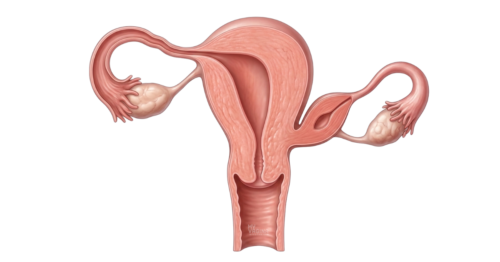
Obstructed uterine horn (non-communicating rudimentary horn)
What an obstructed uterine horn is, why it causes one-sided period pain, and how it is diagnosed and treated.
Neisseria meningitidis (Meningococcal disease)
This bacterial infection can cause urethritis, vaginal bleeding, inflammation and vaginitis.
Mucous membrane pemphigoid
Mucous membrane pemphigoid is an autoimmune condition that affects mucous membranes, including those of the vulva. Mucous membrane pemphigoid can also affect the eyes, causing blisters to appear.
Kallmann syndrome
Kallmann syndrome is a genetic disorder characterised by lessened or no sense of smell and late/no puberty. Girls with Kallmann syndrome may fail to get their period and have very small breasts, with both boys and girls with this condition likely to have other abnormalities present.
Intertrigo – a rash in your creases
Intertrigo is a skin rash that has a few different causes, from infections to inflammation, but typically accumulates in creases. Over time, the skin in the creases can start to crack and become weepy/moist, and become infected.
The hymenal ring, remnants and tags
Hymenal rings and tags are completely normal, however can be a source of discomfort, pain and embarrassment for some of you.
Hirsutism
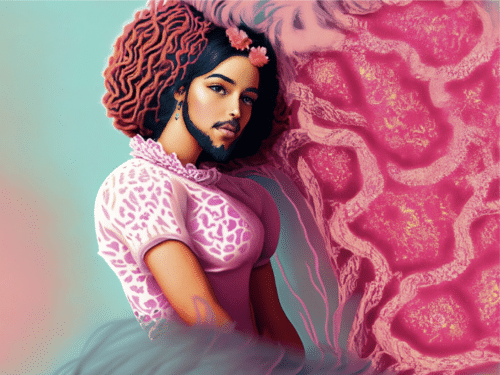
Hirsutism is excess hair growth in a male pattern, in women, often caused by an underlying hormonal condition.
Gestational trophoblastic disease (molar pregnancy)
A molar pregnancy is characterised by a positive pregnancy test, but the growing foetus is actually a tumour. There is actually no foetus present at all, and the pregnancy would never have been viable.
Persistent mullerian duct syndrome (PMDS)
PMDS is a disorder of sexual development that only affects males, but results in a person having a uterus and fallopian tubes. This ducting is present because of a failure for the mullerian ducts to transform under the influence of an enzyme.
Cauda equina syndrome
Cauda equina syndrome is a nerve compression or damage issue in the lower spine, resulting in interruptions to bladder and bowel function. The damage can occur from an accident or disease, and can be temporary or permanent.
Androgen excess in women
Too many androgens or being too sensitive to androgens can cause a whole host of unwanted issues in the biologically female body.
How androgens work in the female body
We take a closer look at how androgens impact the female body, and what you can expect when there are too many or two few androgens present.
Aunt Vadge: bleeding after fingering, but why this time?
She was fingered once and it was totally fine, then she was fingered again and it bled. What happened and why?
Aunt Vadge: why am I bleeding so much after just a small amount of fingering?
Her boyfriend's unpleasant fingering has left her with excessive bleeding three days later. What's happened?
Aunt Vadge: I haven’t had sex for two years – is my vag ok?
A woman is worried that her vagina may not be up to scratch after two years without sex and only masturbating.
What is free bleeding?
Free bleeding is a term used to describe a lack of impediment of menstrual blood - a pad, tampon or menstrual cup - out of the body and into your clothes (or cool period undies!).
Aunt Vadge: I’m so tight, I can’t have sex with my new husband – help!
A new wife is having major issues with vaginal tightness. We discuss what she can do to figure out what's wrong and solve the problem.
Aunt Vadge: What role is insulin resistance playing in my PCOS?
A woman is struggling to understand her stress-related PCOS symptoms.
Aunt Vadge: I only do anal with my boyfriend to stay a virgin, but it hurts
A 19-year-old is having anal sex with her boyfriend over vaginal sex to retain her virginity, but she's not really getting off on it. We talk it over.

Aunt Vadge: is there a cream I can use to heal a vag shaving cut?
She cut her labia shaving - does she just leave it to heal or can she do something?